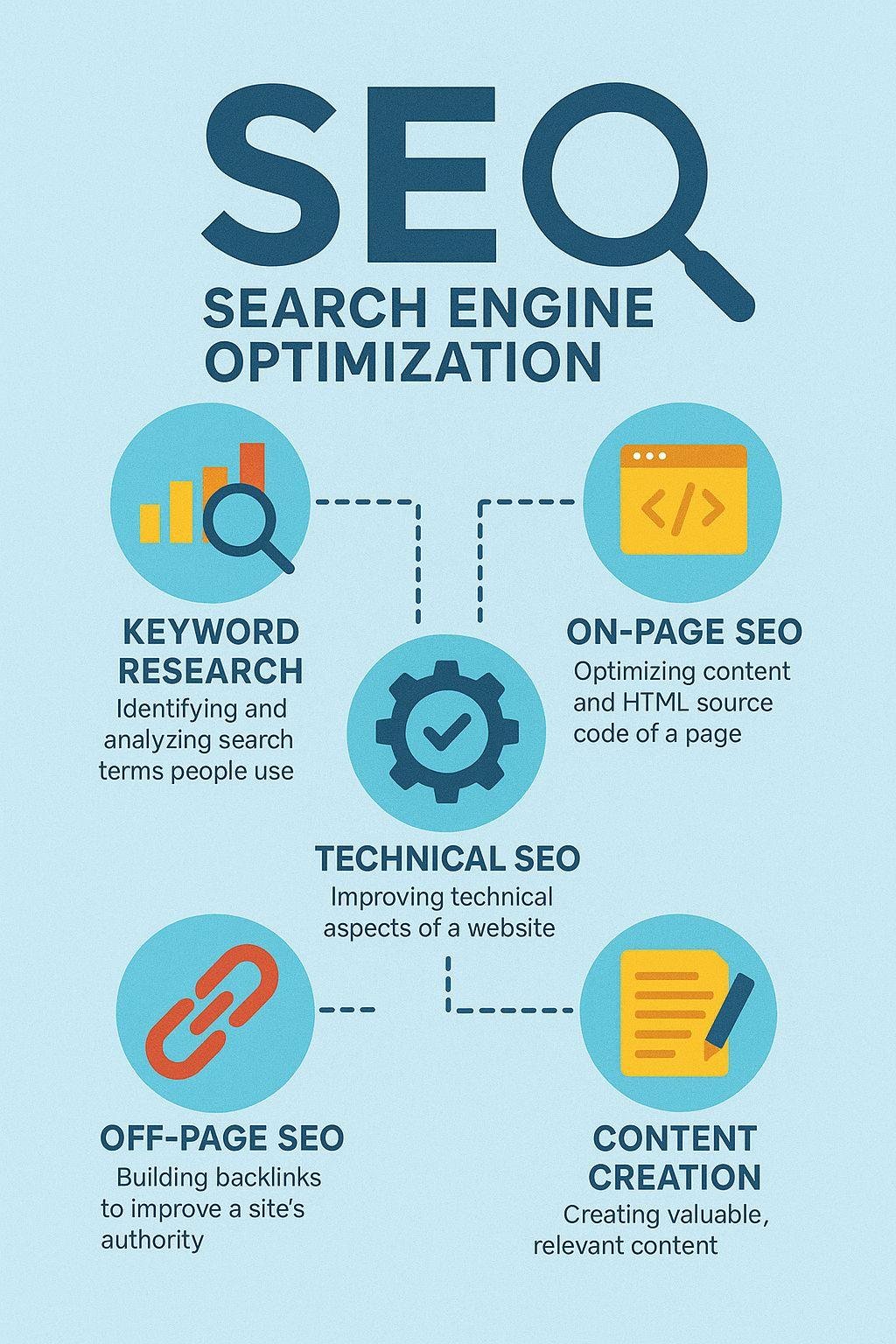
SEO means Search Engine Optimization. It is making a website better so it can show up higher in search results like Google when people look for information, products, or services.
For example, if you have a website that sells shoes and someone searches ‘best running shoes in India’, SEO helps your website have a bigger chance to be on the first page of Google.
How does SEO work?
Search engines like Google use automated programs called crawlers or bots to find and understand websites. Google then checks many things like: the quality and usefulness of the content, keywords used on the page, website speed, mobile friendliness, website structure, links from other websites, user experience, page titles and descriptions, website authority and trustworthiness. Based on these and other signs, search engines decide which pages are most relevant to a search.
Main types of SEO
1. On-Page SEO – This focuses on things you can improve directly on your website. Examples: using relevant keywords, creating useful and original content, optimizing headings, writing good title tags and meta descriptions, optimizing images, improving internal links, creating easy-to-read URLs.
2. Off-Page SEO – This focuses on activities outside your website that can improve its reputation and authority. The most common example is backlinks—links from other websites to your website. For example, if a trusted marketing website links to your digital marketing article, it can help search engines see your website as more authoritative.
3. Technical SEO – Technical SEO focuses on making it easier for search engines to crawl, understand, and index your website. Examples include: improving website loading speed, making the website mobile-friendly, creating an XML sitemap, fixing broken links, using HTTPS, improving website structure, fixing indexing and crawling problems.
Why is SEO important?
SEO is important because it can help a website get free or organic traffic from search engines. Instead of paying for every visitor through ads, a well-optimized website can attract visitors naturally through search results.
For example: Without SEO: you create a website → very few people find it → low traffic. With good SEO: you create useful content → optimize your website → Google understands your pages → your rankings can improve → more people visit your website. SEO vs Paid Advertising: SEO and paid advertising are different.
SEO: you work to improve your organic search rankings. You generally don’t pay Google for each organic click.
Paid Advertising: you pay for ads to show up in search results or other online platforms. SEO usually takes time and continuous effort, while paid advertising can make traffic come faster but needs an ongoing ad budget.
Simple example: suppose you create a website about digital marketing. You write an article called ’10 Best SEO Techniques for Beginners’. You research what people are searching for, create high-quality content, use relevant keywords naturally, optimize the page title and headings, improve the website’s speed, add internal links, and earn links from reputable websites. Over time, Google may think your page is relevant and useful for related searches. If your page ranks well, people searching for SEO information may visit your website.
In simple words: SEO is the process of improving a website’s content, structure, technical performance, and authority so search engines can understand it better and users can find it more easily through organic search results.